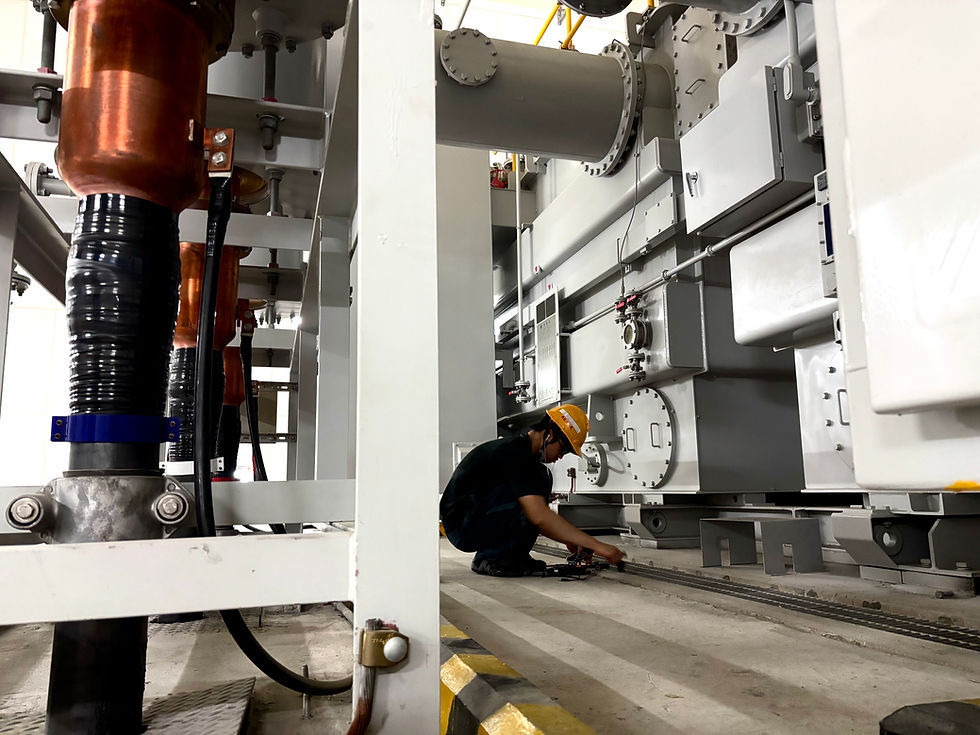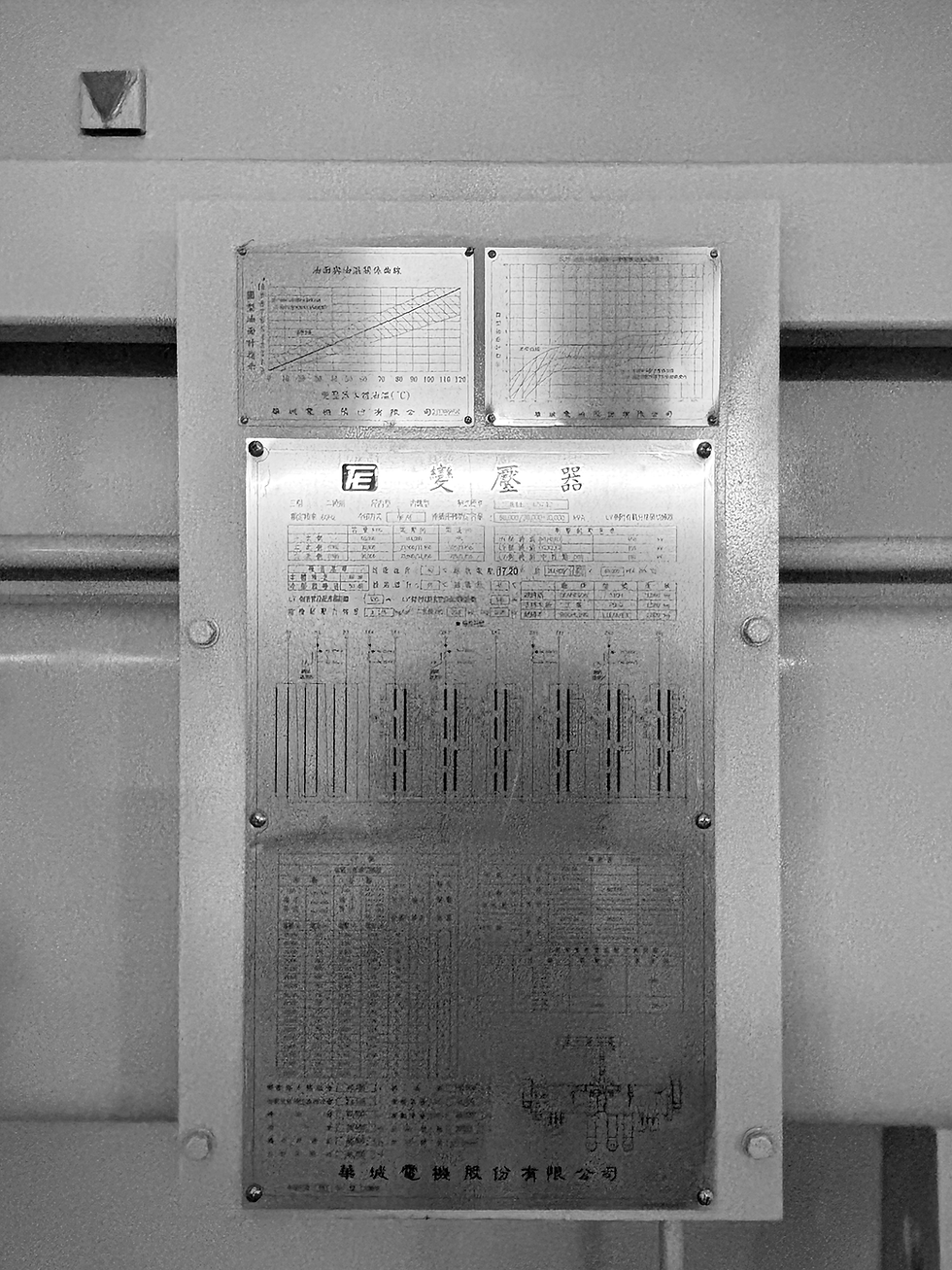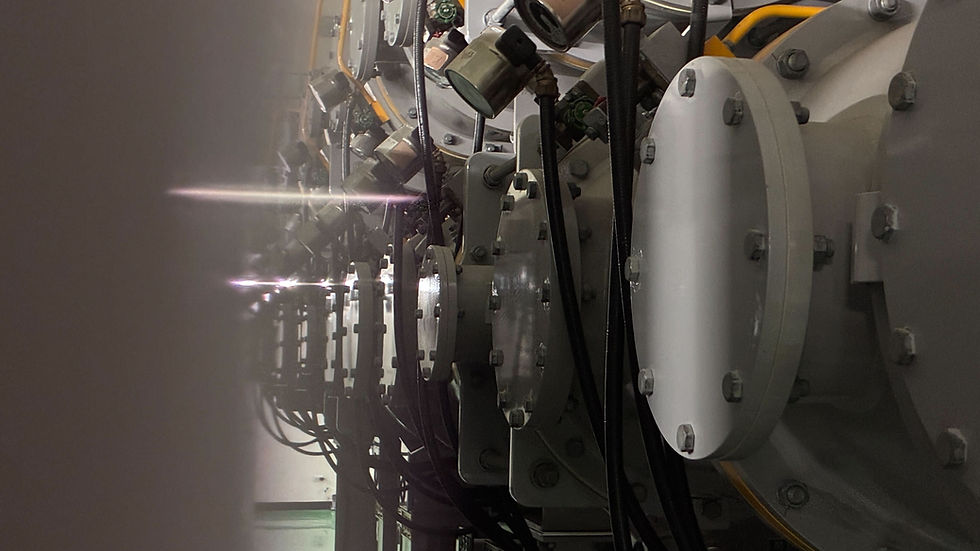

Nanqi Substation, Kaohsiung, Taiwan
Nanqi Substation documents the sound of Taiwan's modern power grid in stable operation. Beyond the low-frequency hum of its main transformers, most equipment remains nearly silent. The continuous hum becomes the clearest evidence of electricity flowing steadily.



ARCHIVE NO. 023
Alarm Sound
Location: Electrical Equipment Room
Recorded: 2026.07.01
Frequency Range: 47 Hz – 15 kHz
ARCHIVE NO. 021
Telecommunications Room
Location: Telecommunications Room
Recorded: 2026.07.01
Frequency Range: 47 Hz – 17 kHz
ARCHIVE NO. 020
Transformer Unit
Location: Electrical Equipment Room
Recorded: 2026.07.01
Frequency Range: 47 Hz – 14 kHz
1921
1941
A Timeline Of Taiwan's Power Development
Explore Taiwan’s power infrastructure through time.
1950
1977
1985
2005
2020
Present
Nanqi Substation

Nanqi Substation - Sonic Archive
Electric Musicology develops a sonic translation for each documented power site. These audio pieces are neither conventional music tracks nor simple reproductions of the original soundscape. Through editing, sampling, classification, and recomposition, each translation interprets the distinctive sonic structure shaped by the site’s energy system, operating equipment, and acoustic characteristics.
Nanqi Substation captures the sounds of Taiwan’s modern power grid. Field recordings of transformers, machinery, and electrical hum are translated into rhythm, frequency, and music.
From Field Recording to Sonic Translation
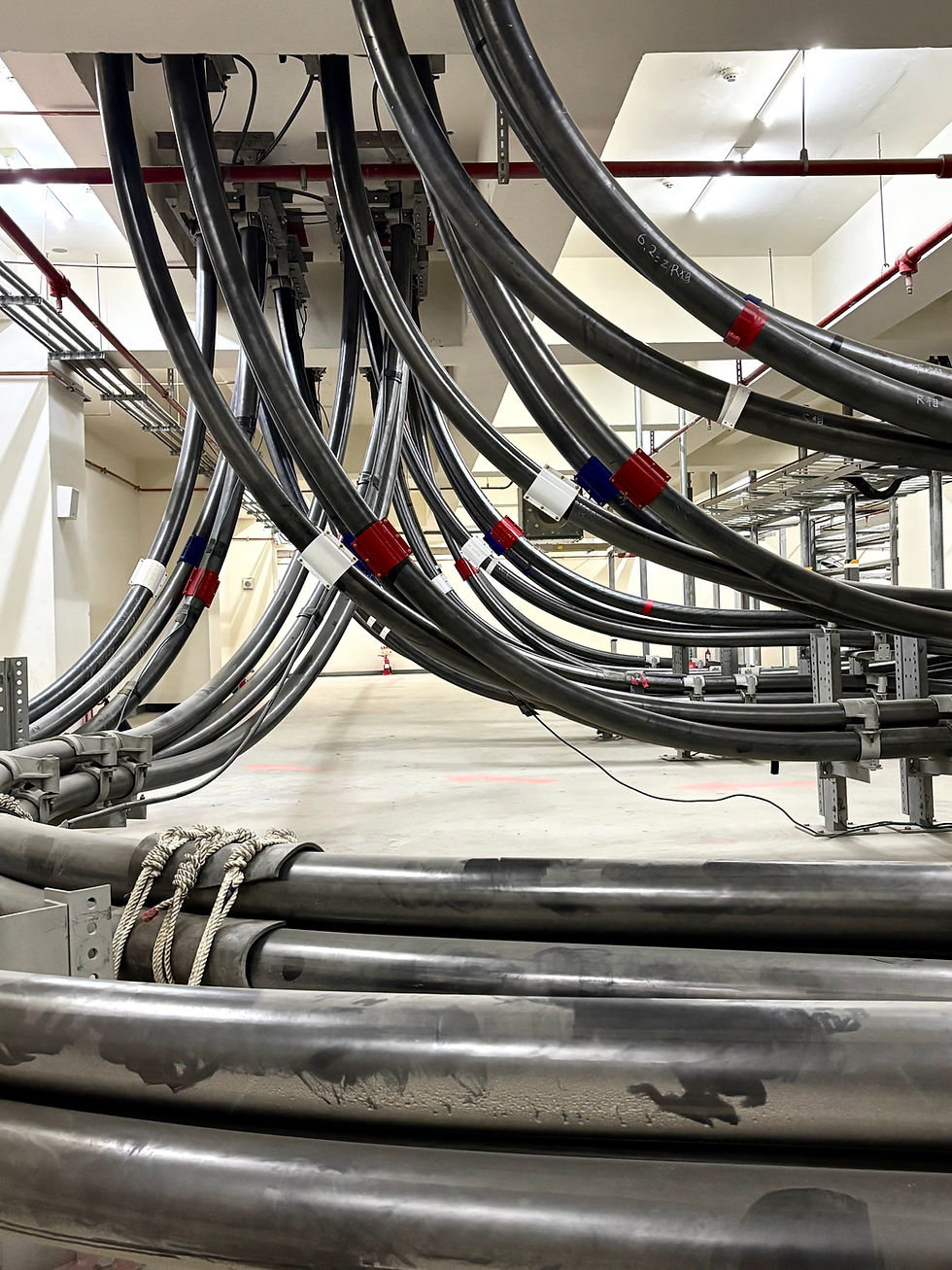.jpeg)
Many of electronic music's sonic characteristics originate from electrical current, signals, and
frequency. Within the power grid, substations are where electricity is transformed, regulated,
and distributed.
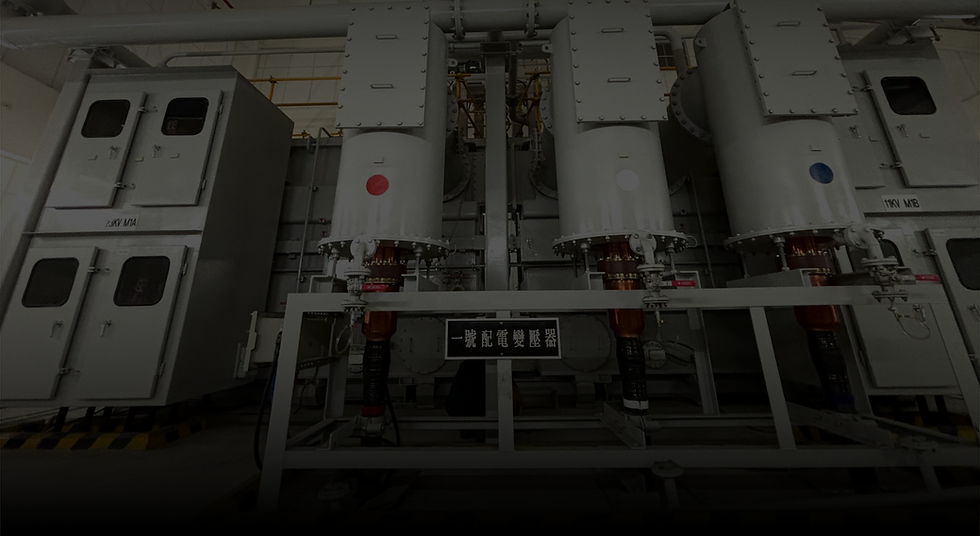
Nanqi Substation, located in Kaohsiung, is one of Taipower's new-generation GIS substations
developed as part of Taiwan's Grid Resilience Enhancement Program. Rather than generating
electricity, it stabilizes and transfers power across different voltage levels, serving as a
critical node within Taiwan's independent power grid.
The most striking discovery during our field recording was not the abundance of sound, but
its remarkable quietness. Apart from the continuous low-frequency hum of the main
transformer, most equipment operates in near silence. Engineers explained that the steady
hum represents normal operation, while unexpected noises, vibrations, or alarms may indicate
changes in system conditions.
For Electric Musicology, Nanqi documents the sound of a stable power grid. These subtle
and often overlooked sonic characteristics become source materials for electronic music,
sound design, and new approaches to listening to Taiwan's electrical infrastructure.